

- FBR
- News
Why QR Codes on Invoices Are Now Mandatory in Pakistan
 FBR Digital Invoicing TeamJanuary 25, 20268 min readReviewed Apr 2026Verified content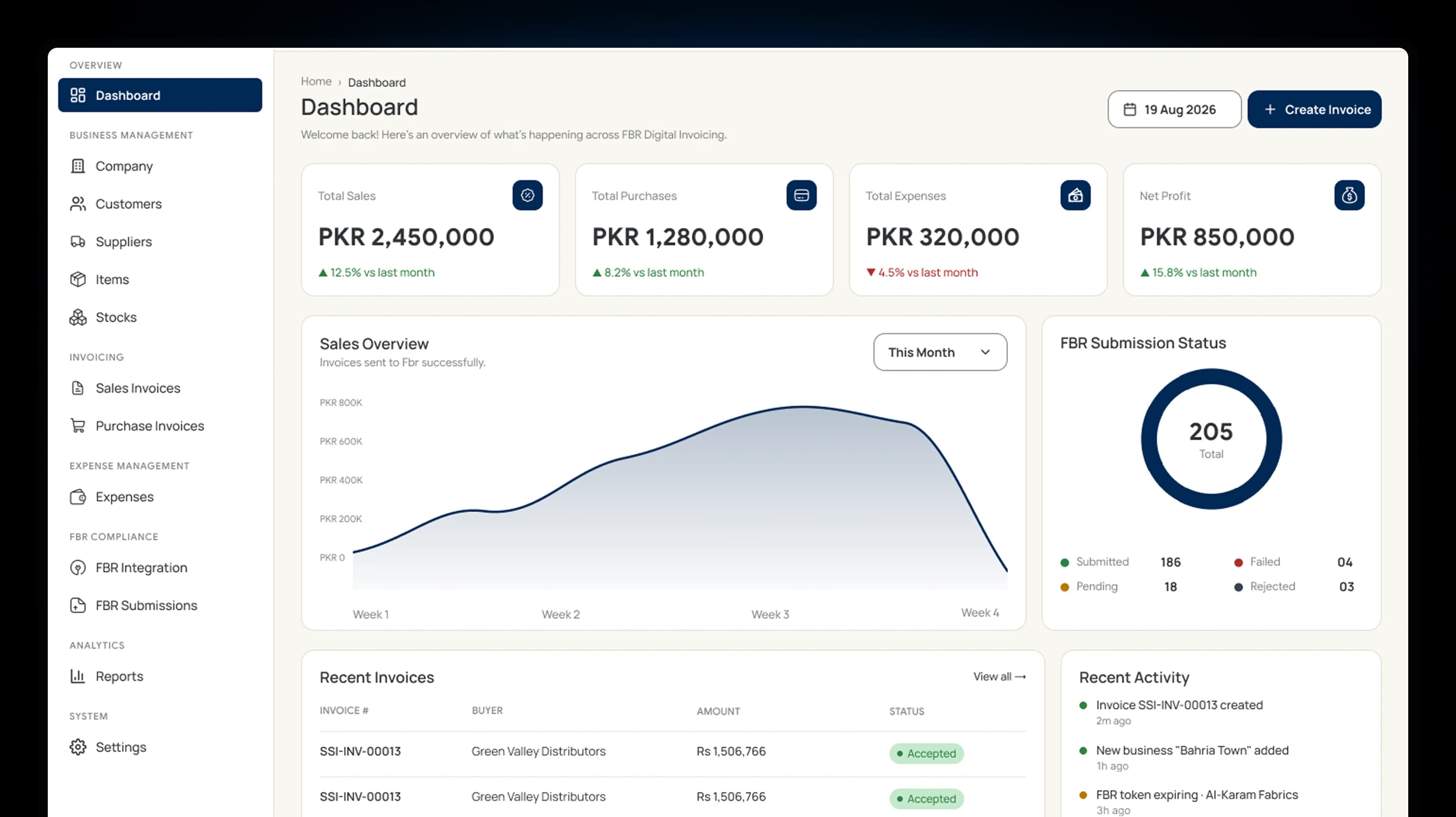
Pakistan is moving toward a more transparent and technology-driven tax system through FBR digital invoicing. One of the most visible changes businesses and customers will notice is the QR code printed on electronic invoices.
The QR code is not simply a design element. It is part of the digital invoicing system that helps make invoices verifiable, traceable, and easier to validate.
What is the QR code on an FBR invoice?
An FBR-compliant electronic invoice contains important information such as the invoice number, seller details, transaction information, and a unique, verifiable QR code.
According to FBR’s digital invoicing technical specifications, the QR code must be printed on invoices generated through the digital invoicing system.
Customers can scan the QR code to help verify whether an invoice has been properly recorded in the FBR system.
Why has FBR introduced QR codes?
The main purpose of QR-based invoice verification is to improve transparency and traceability.
With traditional paper invoices, verifying whether a transaction was actually reported to the tax authorities can be difficult. Digital invoicing changes this by connecting the invoice generated by a business with FBR’s electronic system.
This provides several advantages:
- Easy invoice verification
- Greater transaction transparency
- Reduced chances of fake or duplicate invoices
- Better sales-tax documentation
- Improved record keeping
- Greater confidence for customers and businesses
FBR already provides invoice verification through its Tax Asaan application, where customers can enter an FBR invoice number or scan the QR code printed on an eligible invoice.
Is digital invoicing mandatory in Pakistan?
Yes. FBR states that electronic invoicing is mandatory for notified corporate and non-corporate registered persons under the relevant Sales Tax Rules and S.R.O. 709 dated April 22, 2025.
The stated integration dates were June 1, 2025 for corporate registered persons and July 1, 2025 for non-corporate registered persons.
Businesses that fall within the notified requirements therefore need to ensure that their invoicing systems are properly integrated with FBR.
What information does a digital invoice contain?
An FBR digital invoice contains more than just the total amount.
Depending on the applicable invoice requirements, it can include information such as:
- FBR invoice number
- Seller/business information
- Seller registration details
- Buyer/recipient information where applicable
- Invoice date
- Tax period
- Product or service description
- Quantity
- Tax information
- Total invoice value
- Digital invoicing software registration information
- FBR Digital Invoicing System logo
- Verifiable QR code
FBR’s technical documentation specifies that the FBR invoice number and QR code are required to be printed on the invoice for verification purposes.
How can customers verify an invoice?
For eligible electronically generated invoices, customers can use FBR’s Tax Asaan app.
The general process is simple:
- Open invoice verification in Tax Asaan
- Select Verify Invoice
- Enter the FBR invoice number or scan the QR code
- Check the verification status
FBR also provides an SMS-based verification method through 9966.
This gives customers an additional way to check whether their invoice is recognized by the FBR system.
What does this mean for businesses?
For businesses, the move toward QR-enabled digital invoices means that invoicing can no longer be treated as simply printing a receipt.
Your invoicing software needs to connect to FBR’s Digital Invoicing API so each sale is reported and comes back with an IRN and QR payload. FBR Digital Invoicing does that work for you.
This means businesses should make sure their invoicing solution can:
- Generate compliant electronic invoices
- Connect with the FBR digital invoicing system
- Generate the required FBR invoice number
- Print the required QR code
- Maintain accurate transaction records
- Handle tax information correctly
- Provide invoices that customers can verify
How FBR Digital Invoicing makes compliance easier
Switching from manual invoicing to a digital system doesn’t have to be complicated.
With FBR Digital Invoicing, businesses can automate much of the invoicing process instead of manually preparing and maintaining every invoice.
A good digital invoicing solution can help businesses manage:
Sales → Invoice generation → FBR integration → QR code → Customer verification → Records
This reduces manual work while helping businesses maintain more organized and consistent invoice records.
What should your business do now?
If your business is required to comply with FBR’s electronic invoicing requirements, the first step is to review your existing invoicing workflow.
Ask yourself:
- Is my invoicing system integrated with FBR?
- Does it generate the required FBR invoice number?
- Does it generate a valid QR code?
- Can my customers verify their invoices?
- Are invoices submitted through the official Digital Invoicing API?
If the answer to any of these questions is no, it may be time to move toward a proper digital invoicing solution.
The future of invoicing in Pakistan is digital
QR codes are just one part of Pakistan’s broader transition toward digital tax administration.
The objective is to make transactions more transparent, invoices easier to verify, and tax reporting more efficient for both businesses and the government.
For businesses, adopting digital invoicing early can also mean better records, fewer manual processes, and a smoother approach to FBR compliance.